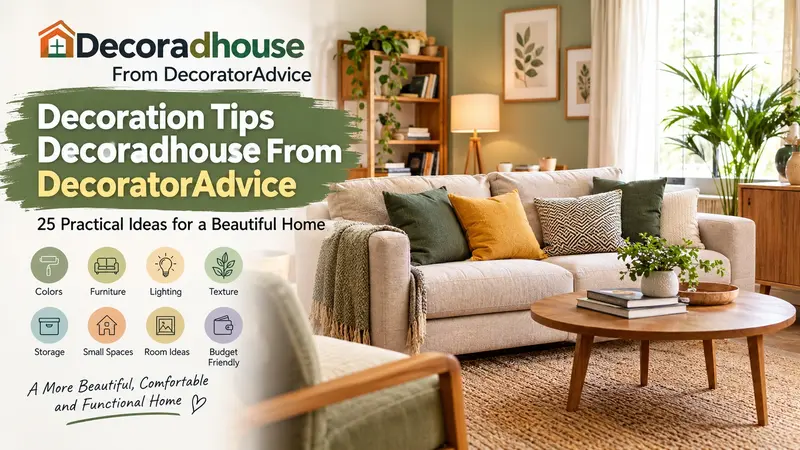
Decorating a home does not have to mean buying expensive furniture, following every interior trend, or completely renovating every room. A beautiful home often comes from making practical decisions about space, color, furniture, lighting, storage, texture, and personal style.
The decoration tips decoradhouse from decoratoradvice approach focus on making a home attractive while keeping it comfortable and useful for everyday life. Instead of filling every empty corner with decorative objects, the goal is to understand what each room needs and then make thoughtful improvements.
Whether you are refreshing a living room, creating a calmer bedroom, improving a small apartment, or simply making your existing furniture work better, the right decorating strategy can make a noticeable difference.
This guide covers practical ideas you can use before buying anything, affordable ways to refresh your rooms, room-by-room decorating suggestions, common mistakes to avoid, and a simple plan for putting everything together.
What Are Decoration Tips Decoradhouse From DecoratorAdvice?
Decoration tips Decoradhouse from DecoratorAdvice can be understood as practical home styling ideas centered around function, balance, comfort, color, lighting, organization, and personality.
The basic principle is simple: a room should not only look attractive; it should also work well for the people who use it.
That means:
- Choosing furniture that fits the available space
- Using colors that work together
- Creating useful lighting layers
- Adding texture and natural materials
- Keeping clutter under control
- Selecting decorations that have meaning
- Making small improvements before expensive purchases
- Maintaining a visual connection between different rooms
You do not need to copy another person’s home exactly. Your room has its own dimensions, natural light, furniture, budget, and daily requirements.
1. Start With a Decorating Plan
The biggest decorating mistake is often buying things before deciding what the room actually needs. Before shopping, stand in the room and look at it carefully.
Ask yourself:
- What do I use this room for?
- What is currently working?
- What feels uncomfortable?
- Where does clutter collect?
- Is there enough storage?
- Does the furniture fit properly?
- What should be the main focal point?
- What would I change if I could make only three improvements?
Write down the answers.
This simple exercise can prevent unnecessary purchases and give you a clear starting point.
2. Decide How You Want the Room to Feel
Decorating becomes easier when you decide on the atmosphere before choosing individual products.
Do you want the room to feel:
- Calm?
- Warm?
- Bright?
- Elegant?
- Modern?
- Cozy?
- Minimal?
- Traditional?
- Natural?
For example, a bedroom designed for relaxation might use softer colors, warm lighting, comfortable fabrics, and fewer decorative objects. A home office may need brighter task lighting, organized storage, and a layout that supports concentration. The purpose of the room should influence its decoration.
3. Choose a Simple Color Palette
Color is one of the fastest ways to change the character of a room.
Instead of selecting many unrelated colors, create a simple palette with a dominant color, a supporting color, and one or two accent shades.
For example:
Warm palette: cream, beige, brown, olive green
Fresh palette: white, light gray, soft blue
Earthy palette: sand, terracotta, natural wood
Modern palette: white, charcoal, muted green
You do not need to use every color equally. The main color can appear on walls or larger furniture, while accent colors can appear through cushions, artwork, rugs, plants, or smaller accessories.
Test Colors Before Painting
Paint can look different depending on natural daylight, artificial lighting, room size, and surrounding furniture. Before painting an entire wall, test a small area or sample. Look at it during different parts of the day before making the final decision.
4. Use Neutral Colors as a Foundation
Neutral shades such as white, cream, beige, gray, and soft brown can make decorating more flexible. A neutral foundation allows you to change cushions, artwork, rugs, curtains, and accessories without redesigning the entire room. However, neutral does not mean boring.
You can add a character with:
- Wood
- Plants
- Textured fabrics
- Artwork
- Ceramic objects
- Woven baskets
- Decorative lighting
The combination of neutral colors and different textures can create depth without making the room visually chaotic.
5. Arrange Furniture Around Function
Furniture should be arranged according to how people actually use the room. In a living room, seating should support conversation and entertainment. In a bedroom, the bed normally becomes the main functional element. In a home office, the desk needs enough space for comfortable work. Do not automatically place every piece against a wall. Depending on the room, bringing furniture slightly inward can create a more intentional seating area. Most importantly, maintain comfortable walking paths. A beautiful layout that is difficult to walk through is not a successful layout.
6. Measure Before Buying Furniture
Always measure before purchasing large furniture.
Record:
- Room length
- Room width
- Ceiling height
- Door width
- Window positions
- Existing furniture dimensions
- Available walking space
Also measure the route through which the furniture will enter the house. A sofa that fits inside the room may still be impossible to bring through a narrow doorway or staircase. Taking measurements first can prevent expensive mistakes.
7. Create Layers of Lighting
Lighting deserves more attention than it usually receives. A single ceiling light may illuminate a room, but it does not necessarily create a comfortable atmosphere. Try combining different types of lighting:
Ambient Lighting
This provides general illumination for the room.
Task Lighting
This helps with specific activities such as reading, working, cooking, or studying.
Accent Lighting
This draws attention to artwork, shelves, architectural details, or decorative objects.
Combining these sources can make the room more flexible throughout the day.
8. Make Better Use of Natural Light
Natural daylight can make a room feel brighter and more spacious. Avoid blocking windows with unnecessarily large furniture when possible. Curtains should allow you to control privacy while still giving you the option to use daylight. You can also place reflective surfaces, such as mirrors, where they can help distribute available light. Before adding artificial lighting, look at how the room changes naturally from morning to evening.
9. Use Mirrors Strategically
Mirrors can serve both decorative and practical purposes. A well-positioned mirror can reflect daylight, create visual depth, and make a smaller room feel more open.
Possible locations include:
- Above a console
- Opposite or beside a window
- Above a bedroom dresser
- Along a narrow hallway
- On a suitable empty wall
The most important consideration is what the mirror reflects. A mirror facing an attractive view, artwork, or light source can add value. A mirror reflecting clutter may simply make the clutter more noticeable.
10. Add Natural Materials
Natural materials can make an interior feel warmer and more welcoming.
Consider adding:
- Wooden furniture
- Rattan
- Woven baskets
- Linen
- Cotton
- Ceramic
- Stone
- Natural fibers
You do not need to use all of these materials. Even a wooden side table, woven basket, or ceramic vase can introduce a different texture and make a room feel less flat.
11. Add Texture for Depth
A room can have a good color scheme but still feel unfinished when every surface looks identical.
Texture adds visual depth.
Try combining:
- Smooth furniture with a textured rug
- Soft cushions with a woven blanket
- Wooden surfaces with ceramic objects
- Linen curtains with solid-colored walls
- Plants with hard furniture surfaces
The goal is not to add as many textures as possible. Instead, use enough variation to keep the room visually interesting.
12. Use Rugs to Define Areas
A rug can help connect furniture and visually define a specific area. In a living room, a properly sized rug can bring the sofa, chairs, and coffee table together. In a bedroom, a rug can provide softness around the bed. When choosing a rug, consider more than appearance.
Think about:
- Size
- Material
- Cleaning requirements
- Pattern
- Color
- Furniture placement
- Household traffic
A beautiful rug that is difficult to maintain may not be practical for a busy home.
13. Give Every Room a Focal Point
A focal point is the element that naturally attracts attention.
It could be:
- A fireplace
- Large artwork
- A statement sofa
- A beautiful window
- A feature wall
- A distinctive piece of furniture
- A large mirror
Once you know the focal point, arrange supporting furniture and accessories around it. Avoid creating several competing focal points in a small room.
14. Decorate Walls Without Creating Clutter
Empty walls can make a room feel unfinished, but filling every wall can make it feel crowded. Choose wall decoration according to the room’s size and overall design.
Options include:
- Framed artwork
- Family photographs
- Mirrors
- Floating shelves
- Wall hangings
- Decorative plates
- Simple prints
A few larger pieces can sometimes create a stronger effect than many small objects.
Create a Balanced Gallery Wall
For a gallery wall, place the frames on the floor before hanging them. Try different arrangements and look for a common connection. The frames do not have to be identical. Similar colors, materials, themes, or spacing can help create visual unity.
15. Style Shelves With Balance
Open shelving can display books, plants, photographs, and decorative objects. The mistake is filling every available space. Instead, leave some empty areas. Combine different heights and shapes. For example, taller objects can balance shorter books or small plants. You can group several objects together while leaving enough breathing room between groups. Remember that shelves should remain practical if they are used regularly.
16. Bring Personal Items Into the Design
A home should not look like a showroom. Personal objects often make a space feel more authentic.
You might display:
- Family photographs
- Travel memories
- Favorite books
- Handmade objects
- Artwork
- Meaningful gifts
- Collections
The key is presentation. Instead of placing every personal item throughout the house, create small displays where the objects can be appreciated.
17. Control Decorative Clutter
Sometimes the best decoration is removing something.
Walk through the room and identify objects that:
- You no longer use
- You do not like
- Do not match anything else
- Take up useful space
- Make surfaces difficult to clean
You do not need to remove everything. The goal is to create enough empty space for important furniture and decorative pieces to stand out.
18. Choose Attractive Storage
Storage can become part of the decoration instead of something that needs to be hidden.
Consider:
- Woven baskets
- Storage benches
- Decorative boxes
- Closed cabinets
- Floating shelves
- Storage ottomans
Use closed storage for everyday items that create visual clutter. Use open storage for things you actually want to display. Good storage can make a room look cleaner without requiring a complete redesign.
19. Refresh Old Furniture Before Replacing It
Old furniture does not always need to be thrown away.
Depending on its condition and material, you may be able to:
- Repaint it
- Replace hardware
- Change cushions
- Refinish a surface
- Move it to another room
- Give it a new purpose
A small wooden table might work as a bedside table, plant stand, or entryway table. Before buying something new, look around your home and consider whether an existing piece can solve the problem.
20. Decorate Small Spaces Intelligently
Small rooms require more attention to scale and movement. Choose furniture that fits the available area and avoid blocking walking paths.
Useful ideas include:
- Wall-mounted shelves
- Storage ottomans
- Narrow consoles
- Mirrors
- Multi-purpose furniture
- Light-colored walls
- Furniture with visible floor space underneath
Keeping some floor area open can make a small room feel less crowded. Do not assume that every small room needs tiny furniture. One appropriately sized statement piece can sometimes work better than several small objects.
21. Room-by-Room Decoradhouse Ideas
Living Room
Start with comfortable seating and establish a clear focal point.
Then add:
- A suitable rug
- Layered lighting
- Cushions
- Artwork
- Plants
- A coffee table
- Useful storage
Keep enough space for people to move comfortably.
Bedroom
The bedroom should feel calm and comfortable.
Focus on:
- Comfortable bedding
- Suitable bedside lighting
- Soft textiles
- Practical storage
- Curtains
- A rug
- Minimal decorative clutter
Avoid turning the bedroom into a storage area.
Dining Room
The dining table should remain functional.
You can add character through:
- A pendant light
- Artwork
- A centerpiece
- A sideboard
- Decorative ceramics
- A suitable rug
Keep the table clear enough for everyday meals.
Kitchen
You do not need a complete kitchen renovation to improve its appearance.
Try:
- Wooden cutting boards
- Attractive storage jars
- Plants
- Woven baskets
- Updated hardware
- Better lighting
- Simple decorative pieces
Keep countertops reasonably clear because kitchen surfaces need to remain functional.
Home Office
A home office should prioritize comfort and organization.
Focus on:
- Proper desk placement
- Comfortable seating
- Task lighting
- Cable management
- Storage
- A simple color palette
- One or two personal decorations
Avoid excessive accessories that can distract from work.
Entryway
The entrance creates the first impression of a home. A narrow console, mirror, small lamp, basket, or artwork can be enough. Keep the entryway functional and avoid blocking the walking path.
22. Use Trends Without Making Your Home Dependent on Them
Interior trends can provide inspiration, but they change. For permanent purchases, consider comfort, durability, function, and personal taste first.
If you enjoy a current trend, introduce it through inexpensive or replaceable items such as:
- Cushions
- Throws
- Artwork
- Small accessories
- Table decorations
This makes it easier to update the room later without replacing expensive furniture.
23. Shop Your Own Home First
Before buying new decoration, look at what you already have. A lamp from another room may work better in the living room. A vase might look more attractive on a bedroom dresser. A chair could become useful in a home office. Moving existing objects can create a surprisingly noticeable change. This approach is also useful when decorating on a limited budget.
24. Use a Simple Budget Strategy
You do not need to spend the same amount on every decorative item. Prioritize purchases according to impact and usefulness.
Low Budget
Focus on:
- Decluttering
- Rearranging furniture
- Existing accessories
- Plants
- Cushions
- Small lighting changes
Medium Budget
Consider:
- Rugs
- Lamps
- Mirrors
- Curtains
- Artwork
- Storage
Larger Budget
Focus on:
- Quality furniture
- Flooring
- Major lighting improvements
- Built-in storage
- Larger room updates
The important principle is to spend where the improvement will actually matter.
25. Leave Some Empty Space
Empty space is an important part of good decoration.
Every one not wall needs artwork.
Not every shelf needs objects.
Not every corner needs furniture.
Open space gives the eye somewhere to rest and allows important pieces to become more noticeable. A room often looks more intentional when there are fewer, better-selected objects rather than decorations covering every available surface.
Common Home Decorating Mistakes to Avoid
Even good decorating ideas can produce poor results when basic planning is ignored.
Buying Furniture Before Measuring
Always measure the room and access points before buying large furniture.
Using Too Many Colors
A room with many unrelated strong colors can become visually confusing. A controlled palette is usually easier to balance.
Ignoring Lighting
Poor lighting can make a well-designed room look dull.
Choosing Appearance Over Comfort
A chair or sofa should not only look good. It should also be comfortable enough for everyday use.
Filling Every Empty Area
Empty space is not automatically a problem.
Copying Another Home Exactly
Online photos can provide inspiration, but your room has different dimensions, lighting, furniture, and lifestyle requirements.
Buying Too Much Decor at Once
Buying everything at once can result in unnecessary objects and inconsistent styling. Make changes gradually.
A Simple 7-Step Decorating Process
If you are unsure where to start, follow this sequence.
Step 1: Declutter
Remove items that are broken, unused, or unnecessary.
Step 2: Measure
Record the room dimensions, furniture sizes, doors, and windows.
Step 3: Define the Function
Decide exactly how the room needs to work.
Step 4: Choose a Color Palette
Select a main color and supporting accent shades.
Step 5: Arrange the Large Furniture
Place the sofa, bed, dining table, desk, or other major pieces first.
Step 6: Improve Lighting
Add or reposition ambient, task, and accent lighting.
Step 7: Add Finishing Details
Introduce rugs, plants, artwork, cushions, books, and personal objects only where they improve the space. This process prevents decoration from becoming random shopping.
Affordable Ways to Make a Home Look Better
A beautiful home does not have to require a large budget.
Try these low-cost changes first:
- Rearrange the furniture.
- Remove unnecessary clutter.
- Change the position of artwork.
- Move plants to better locations.
- Replace harsh lighting with more suitable fixtures.
- Add cushions or a throw.
- Use baskets for visible storage.
- Reorganize shelves.
- Clean windows and reflective surfaces.
- Reuse accessories from another room.
Sometimes the biggest improvement comes from changing what is already there rather than buying something new.
Frequently Asked Questions
What are decoration tips Decoradhouse from DecoratorAdvice?
They are practical home decorating ideas focused on furniture placement, color, lighting, texture, organization, natural elements, personal style, and comfortable everyday living.
What should I decorate first in my house?
Start with the room you use most or the room that currently causes the biggest problem. Declutter it, define its purpose, measure the space, and then work on furniture, lighting, colors, and accessories.
How many colors should a room have?
There is no universal rule, but using one dominant color with one or two supporting shades can make a room easier to coordinate.
How can I decorate my home on a small budget?
Begin with decluttering, rearranging furniture, reusing existing accessories, improving lighting, and adding inexpensive textiles or plants. Purchase larger items only when they solve a genuine problem.
How can I make a small room look bigger?
Keep walking areas open, avoid oversized furniture, use suitable lighting, and consider mirrors or lighter colors where appropriate. Avoid filling every available surface.
Should every room have the same decorating style?
Not necessarily. Rooms can have different personalities, but repeating certain colors, materials, finishes, or design elements can help the entire home feel connected.
How can I make a room look less cluttered?
Remove unnecessary objects, use closed storage for everyday items, leave empty space on shelves and surfaces, and display only decorations that contribute to the room.
Are expensive decorations necessary for a beautiful home?
No. Good proportions, suitable furniture placement, effective lighting, organization, and thoughtful color choices can make a significant difference without expensive purchases.
Final Thoughts
The most useful decoration tips decoradhouse from decoratoradvice are not about buying more things. They are about making better decisions with the space, furniture, colors, lighting, textures, storage, and personal items you already have.
Start by understanding how each room is used. Create a simple color palette, measure before buying furniture, arrange large pieces around function, improve lighting, and add decorative details gradually.
Do not be afraid of empty space. Do not follow every trend. And do not assume that a beautiful home requires an unlimited budget.
The best decorating approach is one that makes your home comfortable, functional, organized, personal, and visually balanced.
Start with one room, make a few meaningful changes, live with them for a while, and then continue to the next space. Small improvements made with a clear plan can create a much bigger difference than an expensive makeover without direction.